Many believe that a natural artistic ability is required to engage in art therapy. This is a widespread misunderstanding in mental health care.
At Horizon CMHC, art therapy helps individuals express emotions safely and comfortably. Our team provides personalized care plans based on each person’s needs.
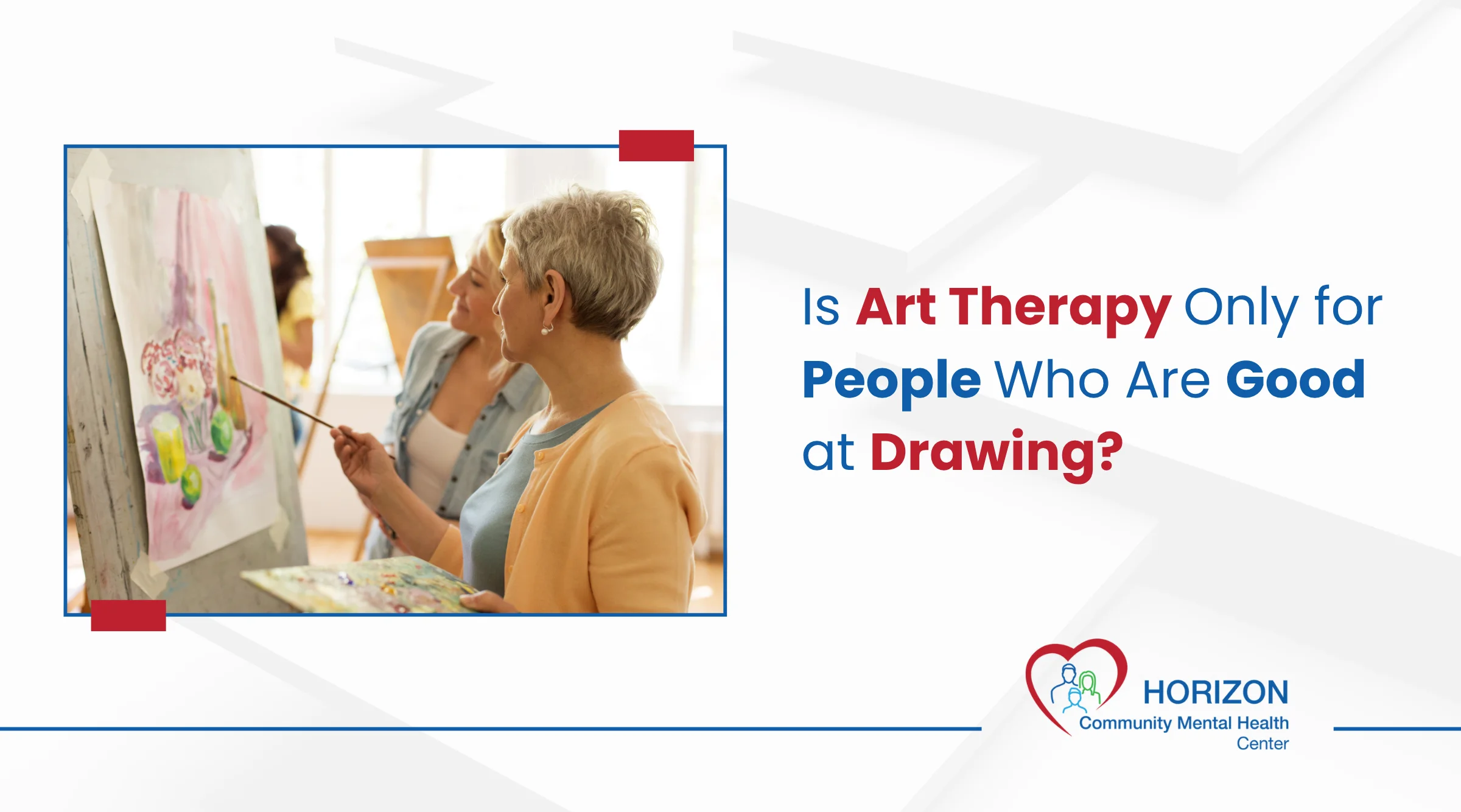
So, is art therapy only for people who are good at drawing? Let’s find out the truth about this creative treatment technique.
What Is Art Therapy?
Art therapy is a mental health care technique that employs creative activities in which patients receive help and guidance from a professional. In each session, a trained therapist helps people explore their thoughts and feelings through art.
People can use various materials to create their work, including:
- Crayons
- Colored pencils
- Paint
- Markers
- Clay
- Paper
- Collage materials
Every activity is planned to match a person’s needs. There is no right or wrong way to create.
Sometimes a person may paint how they feel. Another time, they may build something with clay or create a simple collage. Each project offers a different way to communicate and heal.
Is Art Therapy Only for People Who Are Good at Drawing?
Many individuals think they must be skilled artists to engage in art therapy. This misconception is widespread regarding this form of treatment.
Art therapy is accessible to all. It’s not an art class where participants are evaluated based on their creations. There are no marks, competitions, or need for flawless drawings.
The focus is on how making art helps people unwind, contemplate and understand their emotions. Simple lines, bold shapes, or even finger painting can allow the expression of feelings that are hard to describe.
The aim isn’t to produce stunning artwork. The aim is to enhance emotional well-being.
Why Drawing Skills Do Not Matter
Many people say, “I can’t draw,” before they even consider trying art therapy.
The good news is that drawing ability is not important. Your therapist is not looking for artistic talent. They are interested in what the creative process means to you.
For example, you can use bright colors when you feel happy. You can use dark colors when you feel sad or worried. A story can be told with a simple circle, a few lines or a set of shapes.
Art therapy uses all kinds of simple activities. Here are some things you might do that do not require any drawing skills at all:
- Tear and Paste
You can take colorful paper and tear it into tiny pieces. Tearing paper can help you get rid of mad feelings. Then, you glue those pieces down to make a collage. It requires zero drawing, but it feels wonderful.
- Finger Painting
Do you remember finger painting when you were very small? It is still fun when you grow up! Squishing cold paint with your fingers helps your mind focus on the present moment. It stops you from worrying about the past or the future.
- Clay Smashing
Sometimes, words are not enough to show how stressed you feel. Pounding and shaping a piece of clay lets you move your body and release that stress safely.
Each artwork is unique. It does not need to look perfect to have value.
Your ideas, emotions and experiences matter more than your artistry.
How Art Therapy Helps Mental Health
Making art can help people feel calm. It can also help people understand their feelings.
Art therapy may help you:
- Feel less stress
- Feel less worry
- Build confidence
- Share hard feelings
- Learn healthy ways to cope
- Know yourself better
- Stay calm
- Focus on the present
Making art can also help you feel proud of what you made.
Art Therapy Helps People of All Ages
Art therapy isn’t just for kids. People of all ages can benefit from creative expression.
Children can draw or paint when they do not know how to talk about their feelings.
Teens can use art to share their emotions. It can also help them feel calm and build confidence.
Adults can enjoy art after a busy day. It helps them relax and feel less stressed.
Older adults can have fun with art and crafts. These activities help them feel happy, calm and connected with others.
Creativity supports mental wellness at any age.
What Happens During an Art Therapy Session?
Every session is unique because each person has different needs.
At Horizon CMHC, we create a personalized care plan that supports each individual. Our therapist may invite you to create something using:
- Paints
- Markers
- Colored pencils
- Clay
- Simple craft materials
There is usually no pressure to complete work fast or make something perfect.
After the activity, you may choose to talk about your artwork. Some people like to share what their picture means. Others enjoy creating without explaining it.
Our therapist facilitates the conversation in a loving and respectful manner. You are always in control of what you will share.
Art Therapy Builds Confidence
Many people lose confidence after feeling sad, worried, or stressed. Making art can help them feel stronger.
Finishing an art project shows that trying new things is okay. Over time, many people feel more confident.
They learn new ways to solve problems and share their feelings.
Final Thoughts
So, is art therapy only for people who are good at drawing?
The answer is no.
Art therapy is accessible to all.
Artistic skills are not required. No experience is required. There is no need to make art as you would do on a canvas.
You only need to be open. Explore your thoughts and feelings. Do this in a safe and supportive place.
Horizon CMHC’s team provides personalized care to support you.
If you’re curious whether art therapy suits your needs, we can assist you in evaluating that and addressing your inquiries.
For assistance and support on your journey to emotional well-being,contact Horizon CMHC.
FAQs
What if I make mistakes while creating art?
There are no mistakes in art therapy. Every mark, color and shape can become part of your personal expression.
Can adults benefit from art therapy?
Yes, adults can reduce stress and improve emotional awareness.
Is every art therapy plan the same?
No. At Horizon CMHC, all plans are personalized for each individual.