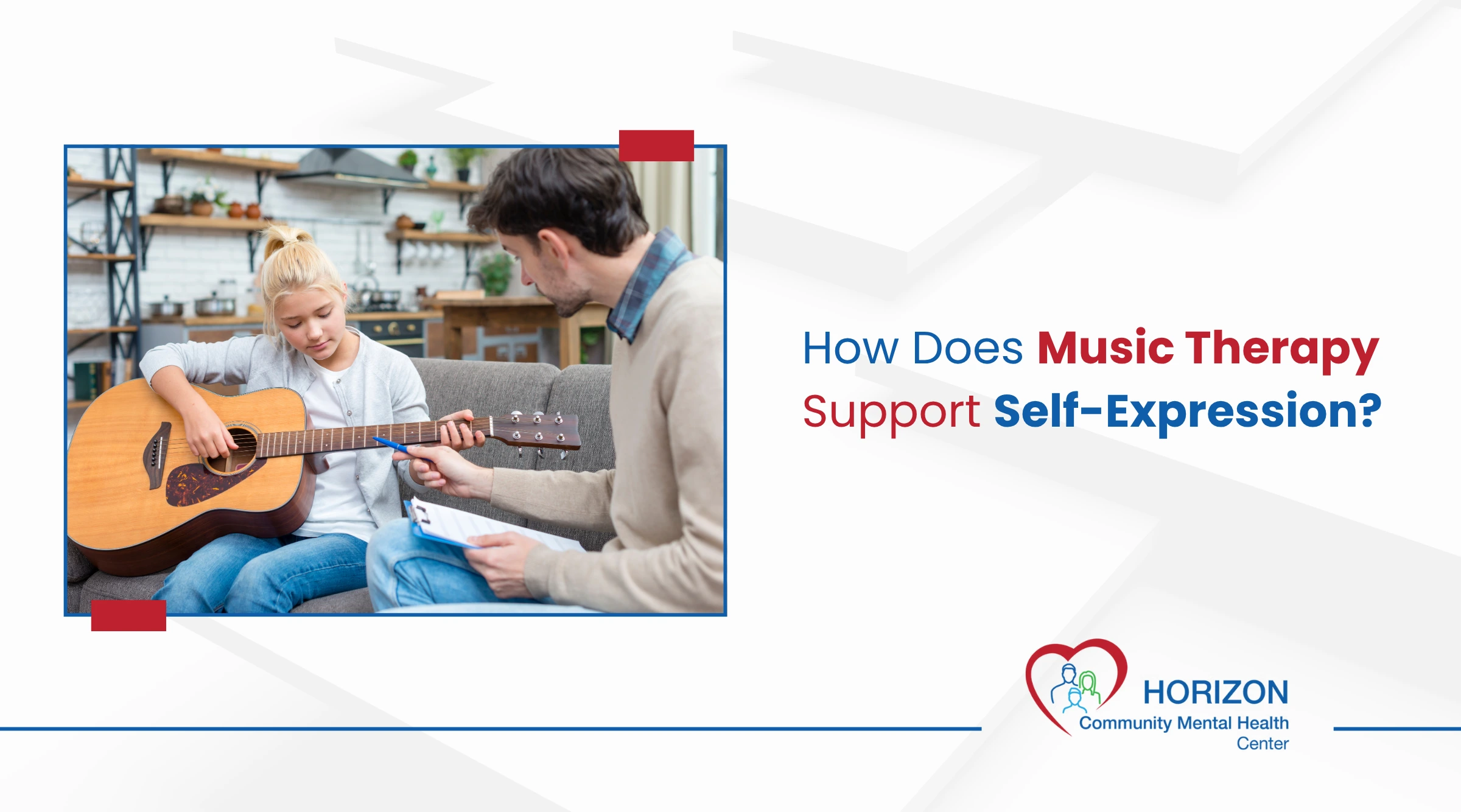
Music is always a big part of human life. It has a calming effect on the mind, holds joy and can make one feel valued. Music therapy is a planned and guided application of these natural effects of music to assist in emotional healing and personal growth.
At Horizon CMHC, music therapy gives children, teens, and adults a fun way to share their feelings. We help them relax and feel better emotionally.
Below, we will learn how music therapy supports self-expression and why it is helpful for many people.
What Is Music Therapy?
Music therapy is a mental health therapy that uses music, rhythm and music-based program activities to promote emotional health and wellness. It is not only about listening to music. It is an active process guided by trained professionals.
At Horizon CMHC, music therapy is used in a safe and caring way to help people:
- Share feelings in a safe space
- Improve communication
- Relax the body and mind
- Build focus and attention
- Understand emotions better
Music therapy is gentle and works for people of all ages. It’s pressure-free and sessions flow at your speed.
What Do Music Therapists Do?
Music therapists are trained experts who understand how music affects emotions. Their job is to provide a safe, supportive space to journey into the emotions with music.
In a session at Horizon CMHC, a therapist may:
- Guide clients in selecting instruments or music
- Encourage emotional expression through rhythm or sound
- Use music to support relaxation and grounding
- Help clients reflect on emotions that arise during sessions
- Support creative activities like songwriting or improvisation
Each session is customized so that the person feels safe, supported and understood.
Why Self Expression Matters
Self-expression is the ability to convey thoughts, feelings and experiences. It might be joy, wonder, distress, fear or confusion. The expression of emotions is necessary for mental well-being and homeostasis.
Early on, when they think that expressing themselves might be full of issues:
- Emotional heaviness or feeling overwhelmed
- Difficulty understanding their own feelings
- Increased irritability or anger
- Feelings of loneliness or isolation
- Accumulated stress
Self-expression can bring people to process their emotions instead of suppressing them. Enables others to see a person’s world, improving relationships and emotional support systems.
Not everyone finds verbal expression easy. Some lack the words; others feel jittery or fidgety when discussing their feelings. This is where music therapy is vital.
How Music Therapy Supports Self-Expression
Music therapy can provide many alternative ways for people to communicate without using words. This can be useful for individuals with a difficult time discussing feelings.
At Horizon CMHC, different types of music therapy are used depending on what a person needs.
Here are 7 types of music therapy:
- Receptive Music Therapy
This includes listening to music and thinking about their feelings. A person could be guided to observe how some sounds may induce calmness, energy or reflection. It acts to develop emotional awareness and calmness.
- Active Music Therapy
In this approach, individuals play instruments, clap rhythms, or create spontaneous sounds. It permits expression of emotions through physical and creative means in a safe space.
- Songwriting Therapy
The act of writing songs assists people in converting their experiences into lyrics and a tune. This can be useful to meditate on and review heavy feelings and life situations.
- Analytical Music Therapy
This method explores emotional responses to music more deeply. Clients discuss why particular sounds evoke particular memories or feelings, and help to develop an understanding of emotional patterns.
- Drumming Therapy
Drumming can be used to expel and let out very strong thoughts about anger, frustration or excitement. The rhythm serves to create a structure, yet allows expression.
- Guided Imagery with Music
In this procedure, gentle music is utilized to direct the imagination. Individuals may visualize peaceful places or comforting memories, which support emotional healing and relaxation.
- Music-Assisted Relaxation
Soft and calming music is used to reduce stress and regulate the nervous system. This supports people to feel grounded, safe and emotionally balanced.
These music therapy techniques are chosen with care that suits the emotional needs. The aim of it is to assist somebody to say what they can’t say verbally.
Who Can Benefit from Music Therapy?
Music therapy can help many different people, including:
- Children who find it hard to talk
- Teenagers dealing with stress, making music therapy for teens is especially helpful
- Adults facing anxiety or sadness
- People recovering from emotional challenges
- Anyone who wants a safe way to express feelings
It is not only for people with serious problems. It can also help anyone who wants to understand themselves better.
Final Thoughts
Music therapy is a kind and helpful way to express feelings. It helps people feel calm, strong and understood.
Through music, people can share emotions that are hard to express with words.
At Horizon CMHC, the goal is to help every person feel supported, heard and emotionally safe. Healing takes time and music can make that journey easier.
If you or someone you know is struggling to express emotions or has music therapy questions, support is available. Reaching out is the first step toward feeling better and finding your voice again.
FAQs
Do I need musical skills for music therapy?
No. You do not need any music skills. Anyone can do it.
How long is a session?
Sessions typically last between 30 to 60 minutes, depending on individual needs and therapeutic goals.