Music has been a part of human life for thousands of years. It can motivate, comfort and inspire people of all walks of life.
Today, music acts as a strong therapeutic resource to aid emotional, mental and personal advancement.
Music therapy includes structured sessions and creative music therapy activities. It helps people feel better. It also teaches important life skills that last for years.
At Horizon CMHC, we use music therapy to help people improve their focus, relax, learn new skills and communicate better. Each individual is unique and from this, care is developed to meet needs.
What Is Music Therapy?
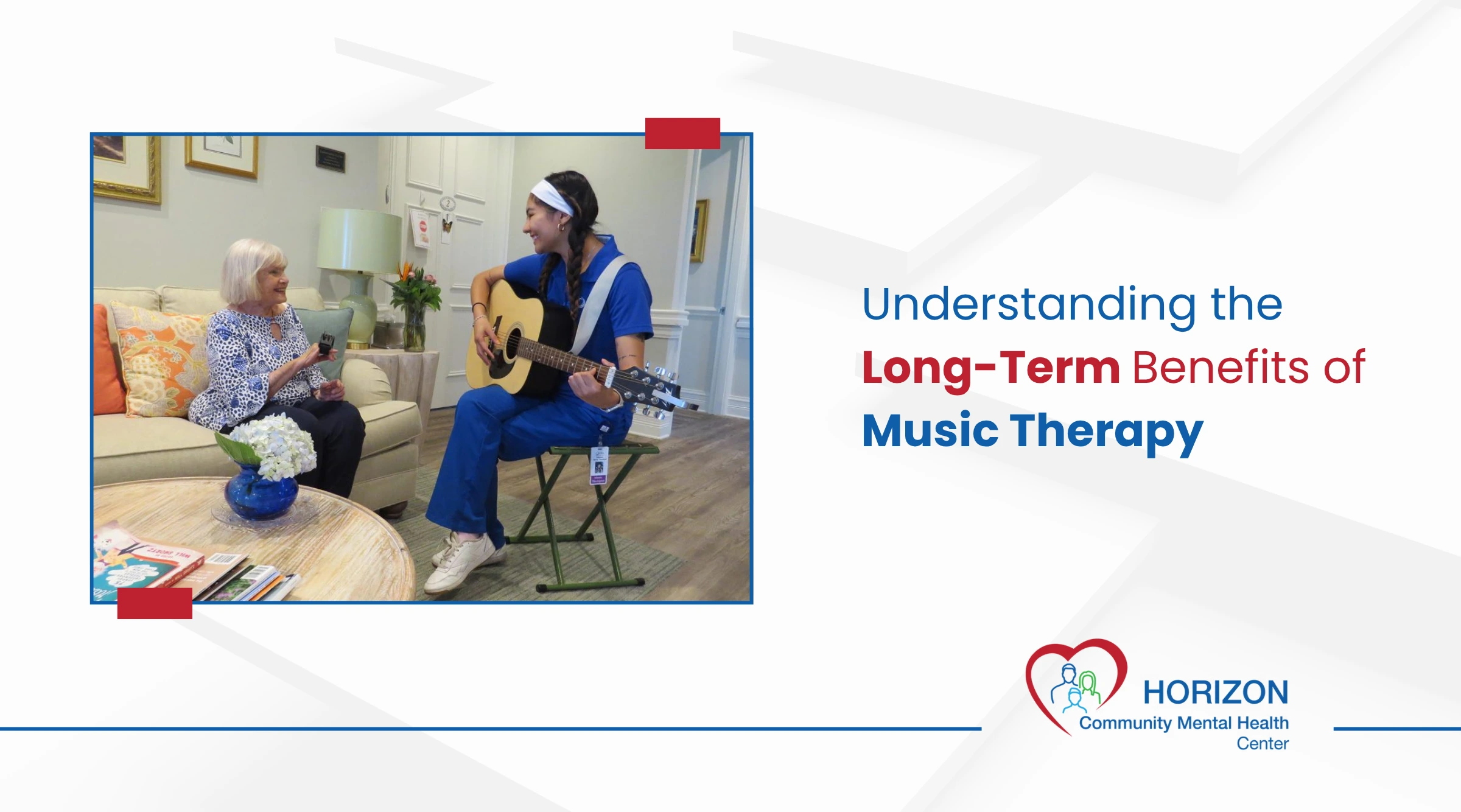
Music therapy is a unique therapy that utilizes music to assist people. During a session, a person may:
- Listen to music
- Sing songs
- Play simple instruments
- Make their own music
Music therapy provides more to the listener than just songs. A music therapist is educated in music therapy, who arranges enjoyable activities that assist individuals in acquiring new skills and improving their well-being.
People of all ages can enjoy music therapy, including children, teens, adults and older adults.
What Does a Music Therapist Do?
Certified music therapists have a mixture of clinical training and musical knowledge. They understand:
- Psychology
- Neuroscience
- Human development
- Therapeutic techniques
Their special skill is being able to customize music therapy interventions to the needs of the individual. This guidance is to help maximize benefits. This also guarantees that interventions are safe, effective and appropriate.
How Music Therapy Helps Over Time
Some benefits of music therapy can happen quickly. A person may feel happier or more relaxed after a session.
Benefits grow over time, building skills and confidence that create positive changes.
Better Emotional Health
Music can help people express their feelings. Sometimes it is difficult to have words for feelings. Music allows individuals another outlet for their inner voice.
Over time, music therapy can help people:
- Understand their feelings
- Stay calm during stress
- Feel more confident
- Handle challenges better
- Feel happier each day
Learning how to manage emotions is an important life skill.
Stronger Communication Skills
Good communication helps people connect with others. Music therapy can help people practice speaking, listening and sharing ideas.
Through songs and music activities, people can learn to:
- Listen more carefully
- Share their thoughts
- Express their feelings
- Work with others
- Build better relationships
These skills can help in school, at work and at home.
Improved Focus and Attention
Attention is vital for learning and daily tasks. Music therapy includes music therapy activities that help people focus and follow directions.
Over time, these activities can help people:
- Stay focused longer
- Improve memory
- Follow instructions
- Complete tasks
- Learn new things more easily
At Horizon CMHC, our music therapy sessions combine creative activities with structured music therapy interventions to support growth and concentration.
Reduced Stress and Increased Relaxation
Living in today’s world isn’t always stress free and under pressure. Uncontrolled stress can have a negative impact on emotional wellness, relationships, sleep and other areas of well-being.
Music Therapy is a relaxing and fun treatment to promote relaxation. Relaxing music experiences assist people to slow down, concentrate on the now and help them soothe tension.
Regular practice helps people manage stress and handle challenges.
Long-term stress reduction benefits may include:
- Improved sleep quality
- Better emotional balance
- Reduced physical tension
- Increased feelings of calm
- Healthier responses to daily challenges
They help you live a more balanced life.
Better Social Skills
Human connection is essential for emotional and mental wellness. Music unites through experiences and group creation.
Group music activities help people connect and learn from each other.
Long term social benefits may include:
- Increased confidence in social settings
- Improved relationship-building skills
- Greater sense of belonging
- Enhanced empathy and understanding
- Stronger community connections
Such positive social experiences will help to combat isolation and promote interactions that are important to them.
More Confidence
Learning something new can make people feel proud. In music therapy individuals may expand their activities and enjoy their successes.
When people succeed in music activities, they often feel:
- More confident
- More motivated
- More positive
- More willing to try new things
This confidence can help them in many parts of life.
Support for Lifelong Learning
Music therapy helps people learn in fun ways. It uses music, singing, moving and playing. These activities help the brain work better.
Music therapy can help people of all ages. It makes learning easier and more enjoyable.
Long-term benefits may include:
• Better memory
• Longer attention span
• Easier problem solving
• Better thinking skills
• More excitement to learn
These skills can help people keep learning and growing throughout their lives.
A Personalized Approach Makes the Difference
Everyone is different. That is why every music therapy plan is different.
At Horizon CMHC, we tailor every plan to your specific needs and goals.
Our music therapy services combine creative expression with structured learning to:
• Improve concentration
• Encourage relaxation
• Enhance communication skills
We work with you to ensure meaningful progress and lasting benefits.
Why Long Term Benefits Matter
The skills learned in music therapy do not stay in the therapy room. People can use these skills every day.
They can use these skills every day. They might feel happier, find friends more easily, manage stress and trust themselves.
These skills allow individuals to thrive in healthier and happier circumstances.
Conclusion
Music therapy is a fun and helpful way to learn and grow. Through carefully designed music therapy activities, people feel better, build confidence, improve focus and make stronger friendships.
At Horizon CMHC, we care about every person. We make music therapy plans that fit each person’s needs.
If you or someone you love could benefit from music therapy, contact Horizon CMHC today. We are ready to help.
FAQs
Can music therapy help with depression?
Yes. Music therapy can help people feel less sad and improve their mood.
Do I need musical talent for music therapy?
No, engagement matters more than skill.