
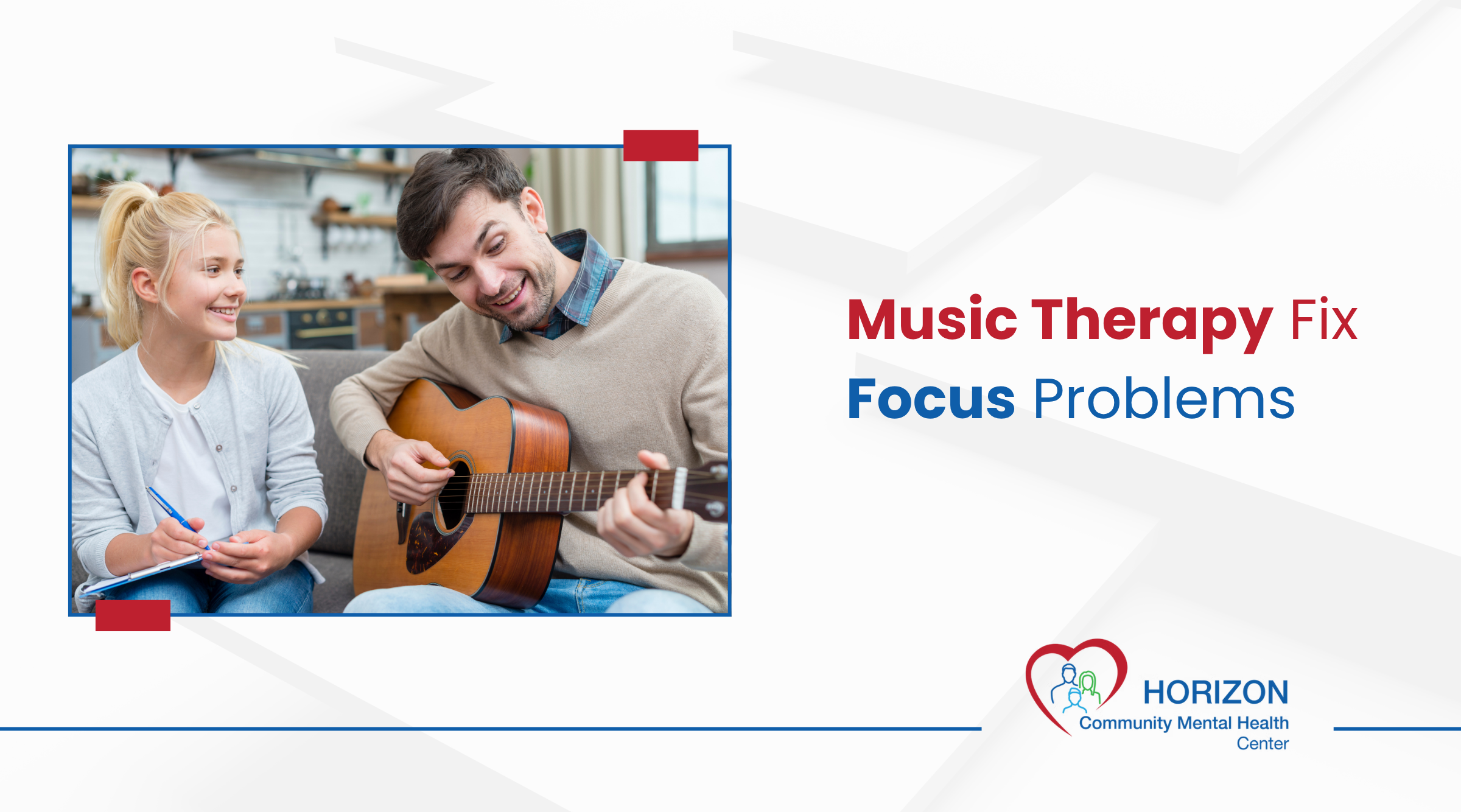
Many people have trouble focusing. Some forget small tasks. Some lose track during talks. Others get tired fast when they try to read, work, or think. This can happen to adults and seniors, too. It may feel frustrating, but help is available.
At Horizon CMHC, we know that healing should feel warm, safe and caring. We support adults and seniors with mental health care that feels like home. One helpful support many people ask about is music therapy. It uses music in a planned way to help the mind and body work better together.
Music therapy may not fix every focus problem by itself. It can serve as a supportive element of care. For some people, it makes the mind feel calm, steady and ready to pay attention.
What Is Music Therapy?
Music therapy is more than just listening to songs. It is a guided activity led in a caring way. A person may listen to music, sing, clap, move, or take part in simple music tasks.
Music therapy can help people:
- Feel calmer
- Stay more alert
- Join in with others
- Use memory in a gentle way
- Slow down racing thoughts
- Feel less stress
When stress goes down, focus can get better too.
How Music May Help Focus
Music can give the brain a steady beat. That beat can help the mind stay on one path. It can also make a person feel more awake and ready to take part.
Here are some ways music may help:
- It can block out loud sounds.
- It can make a person feel relaxed.
- It can give the brain a clear rhythm.
- It can make a task feel easier to start.
- It can help people stay in the moment.
For some adults and seniors, music brings back memories. That can be helpful too. A familiar song may wake up attention and bring a person into the present.
Who May Benefit Most?
Music therapy can be a good choice for many people. It may help adults and seniors who have trouble with focus because of stress, sadness, worry, memory changes, or tiredness.
It may also help people who:
- Feel lonely
- Have a hard time relaxing
- Struggle to stay involved in group settings
- Need a gentle way to stay active
- Want a calming part of their care plan
At Horizon CMHC, we care for seniors and adults with services that support the whole person. Music therapy is one part of that caring approach.
What Music Therapy May Look Like
Music therapy can be simple. It does not need to be loud or hard. It can be soft, easy and comforting.
A session may include:
- Listening to calm music
- Singing with the therapist or group
- Clapping to a beat
- Tapping hands or feet in time
- Talking about how a song feels
- Using music during light movement
These small steps can help the brain stay active. They may also help a person feel more connected.
Why It Can Work Well with Other Support
Music therapy is often best when it is part of a bigger care plan. It can work well with group therapy, individual therapy, arts and crafts and games.
At Horizon CMHC, we offer:
- Group Therapy
- Individual Therapy
- Music and Educational Therapy
- Arts and Crafts
- Games
Each service can support focus differently. Group therapy helps people listen and share. Individual therapy gives one on one support. Arts and crafts can help with hand use, thinking and attention. Games can build memory, patience and problem solving.
When these supports work together, people may feel steadier and more engaged.
Simple Ways Music Can Support Daily Life
Music therapy can also lead to helpful habits outside of sessions. A person may learn simple ways to use music at home or during the day.
For example:
- Play soft music during quiet tasks
- Use music to start the morning
- Listen to one song before a walk
- Sing a favorite tune while folding laundry
- Use calm music before bedtime
These small habits may help the mind stay settled and ready.
What It Can Not Do Alone
Music therapy can help, but it is not a magic fix. Some focus problems need more care. A person may also need therapy, medical support, healthy rest, or changes in daily habits.
Focus trouble can come from many things, such as:
- Stress
- Anxiety
- Depression
- Poor sleep
- Pain
- Memory changes
- Medical concerns
That is why care should be personal. A good plan looks at the whole person, not just one symptom.
Why A Warm Setting Matters
People focus better when they feel safe. They also learn better when the space feels calm and kind. That is why the setting matters so much.
Dr. E. Rosenman, Medical Director Psychiatrist, leads with a clear vision of care that feels like home. His goal is to create a center that is warm, welcoming and safe. That kind of space can make it easier for people to open up, join in and heal.
At Horizon CMHC, we want care to feel human. We want people to feel seen, heard and respected.
Signs Music Therapy May Be Worth Trying
Music therapy may be a good fit if someone:
- Has trouble staying on task
- Feels calmer with music
- Enjoys singing or listening to songs
- Likes group activities
- Wants a gentle way to join care
- Needs support that feels less stressful
It can be especially helpful for people who do not enjoy more intense or formal activities.
A Caring Path Forward
Can music therapy fix focus problems? For some people, it can help a lot. For others, it may help only a little. But even small gains matter. Better focus can make daily life easier. It can help with talking, reading, joining groups and finishing tasks.The best results often come from steady care, kind support and a plan made for the person.
At Horizon CMHC, we are here to support adults and seniors with services that build comfort, strength and hope. Music therapy can be one gentle step on that path.
Final Thoughts
Music can do more than entertain. It can calm the mind, spark memory and help the brain pay attention. For people with focus problems, that can make a real difference.
If you or a loved one wants caring support in a warm setting, Horizon CMHC offers help that feels personal and safe. Our team works to make healing more hopeful, one step at a time.
FAQs
Q. What happens in a music therapy session?
A person may listen to music, sing, clap, or move with a beat.
Q. Can music therapy replace other mental health care?
No. It works best with other care, like therapy and support.