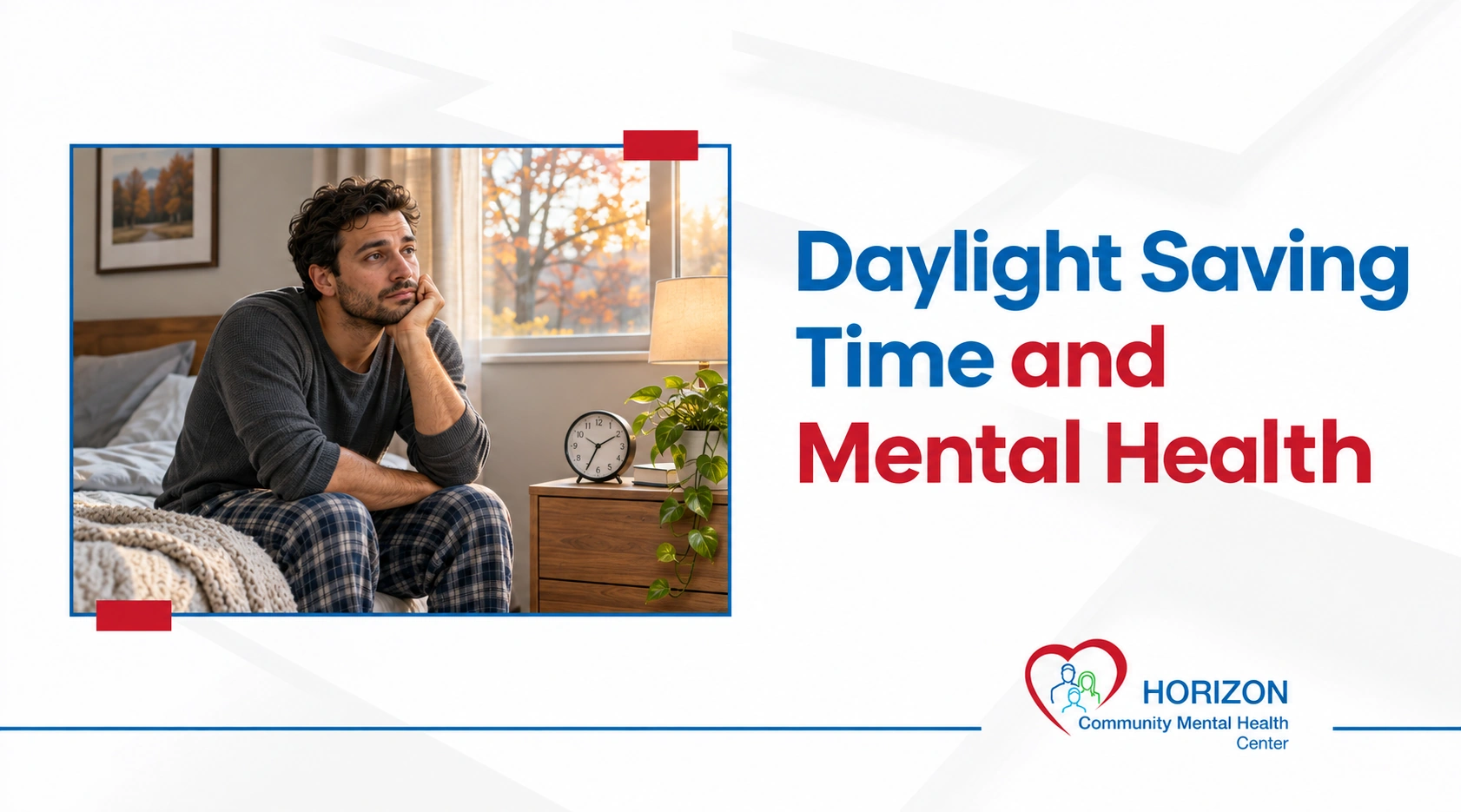
Daylight saving time and mental health are connected because the November clock change moves sunset earlier without reducing total daylight. That earlier darkness can disrupt your body’s internal clock, leading to short term shifts in sleep timing, energy, and mood. For most people, these effects ease within one to two weeks as the body adjusts.
If the early sunsets this month have left you feeling off balance, you are not imagining it. The link between daylight saving time and mental health shows up in small but noticeable ways: an earlier bedtime that sneaks up on you, a midafternoon fog that was not there a few weeks ago, or less motivation for activities you normally enjoy. On November 1, clocks moved back one hour across most of the country, and many people are still adjusting to how early it now gets dark in the evening.
This article explains what is actually happening inside your body during this seasonal shift, which changes are common, and when those changes might signal something that deserves more attention. It also covers practical steps you can take to support your sleep and emotional wellbeing, and where to turn if adjusting to the time change feels harder than it should.
Understanding Daylight Saving Time and Mental Health
Daylight saving time and mental health are linked through the circadian rhythm, the body’s internal clock that regulates sleep, alertness, and hormone release over a roughly 24 hour cycle. This internal clock depends heavily on light exposure to stay on schedule. Light signals received through the eyes help set the timing of the circadian rhythm, according to the National Institutes of Health, and that timing in turn influences when you feel sleepy and when you feel alert.
It helps to separate two things that often get blended together in conversations about fall and mental health. The first is the clock change itself, a one hour shift that moves sunset and sunrise earlier on the calendar. The second is the seasonal reduction in daylight that happens on its own as autumn moves toward winter. The clock change does not reduce the total number of daylight hours in a day. It simply reassigns those hours, so the sun sets earlier in the evening and rises earlier in the morning.
That distinction matters because people often credit every autumn mood shift to the clock change alone. In reality, both factors, the sudden one hour shift and the gradual shortening of daylight, work together to affect how your body and mood respond during this stretch of the year.
Changes in Sleep, Mood, and Daily Energy
Sleep timing is often the first thing to shift after the clocks move back. Earlier darkness can trigger an earlier release of melatonin, the hormone that signals the body to prepare for sleep, according to the National Heart, Lung, and Blood Institute. That earlier signal can leave you feeling tired sooner in the evening or waking before your usual alarm.
Energy and concentration often follow. Some people notice an afternoon slump that feels more pronounced than usual, or find it harder to stay focused on tasks that normally come easily. Mood changes are common too. A flat or subdued feeling in the early evening, when it is suddenly dark outside, is a frequently reported experience during this period. Irritability can also increase as sleep patterns adjust.
Daily routines shift as a result. Exercise plans, errands, or social activities that depended on daylight may need to move earlier or be reorganized entirely.
It is worth stating plainly that responses vary widely from person to person. Some people barely notice the change. Others feel its effects for days or weeks. Age, existing sleep habits, geographic location, and individual sensitivity to light all influence how strongly someone experiences this seasonal shift.
Temporary Adjustment and Seasonal Depression
Most people experience a brief adjustment period after the clock change, typically resolving within one to two weeks as the body resynchronizes its internal clock to the new light pattern. This is a normal, expected response to a sudden shift in light exposure, not a sign that something is wrong.
Seasonal affective disorder, often called SAD, is a different and more specific condition. The National Institute of Mental Health describes SAD as a type of depression that follows a seasonal pattern, most commonly beginning in late fall or winter and lifting in spring. It involves persistent symptoms such as low mood, loss of interest in activities, changes in appetite or sleep, and low energy that last for weeks, not days, and that recur in a predictable seasonal pattern year after year.
The clock change alone does not cause SAD. Experiencing a few days of low energy or a shifted sleep schedule does not mean you have a diagnosable condition. This distinction matters because mistaking a temporary adjustment for a clinical diagnosis can cause unnecessary worry, while dismissing symptoms that genuinely deserve attention can delay needed support. Choose patience if your symptoms are mild and improving. Choose professional guidance if symptoms are persistent, worsening, or interfering with daily life, regardless of how many days have passed.
Practical Ways to Support Sleep and Emotional Wellbeing
Supporting your body through this transition comes down to a handful of consistent habits.
- Keep a consistent sleep and wake schedule. Going to bed and waking at the same time every day, including weekends, helps reinforce your circadian rhythm. The American Academy of Sleep Medicine identifies consistent sleep timing as one of the most effective habits for maintaining healthy sleep.
- Get outside during daylight hours. Natural light exposure during the day, particularly in the morning, helps anchor your internal clock to the current light pattern. This is different from clinical light therapy, which uses a specific medical device under professional guidance. A walk outside or sitting near a window during daylight hours is a simple daily habit, not a substitute for clinical treatment.
- Stay physically active. Regular movement during the day supports better sleep quality and has a documented positive effect on mood.
- Build a calming evening routine. Dimming lights, limiting screen time, and winding down at a consistent hour each night can ease the transition into sleep as evenings grow darker earlier.
- Stay socially connected. Regular contact with friends, family, or community groups can buffer against the isolating pull of shorter, darker evenings.
- Pay attention to caffeine timing. Caffeine consumed later in the day can interfere with falling asleep at your intended bedtime, compounding the effects of a shifted schedule.
These steps are general wellness practices, not a treatment plan. If you are considering supplements, medication, or a light therapy device, speak with a clinician first rather than choosing a product on your own.
When to Seek Professional Support
Persistent, worsening, or disruptive symptoms deserve attention. If low mood, sleep disruption, or lack of motivation continues beyond what feels like a short adjustment, or if it begins to interfere with work, relationships, or daily functioning, that is a signal worth taking seriously.
There is no fixed number of days that determines when to seek help. Trust the pattern you are observing in yourself more than a calendar. If symptoms are intensifying rather than easing, or if they resemble the recurring seasonal pattern described above, reaching out to a mental health professional is a reasonable and proactive step, not an overreaction.
Mental Health Support at Horizon CMHC
You do not have to sort through sleep and mood changes on your own. Horizon Community Mental Health Center, located in Woodland Hills, California, offers a range of services designed to support people through exactly this kind of seasonal transition.
Horizon CMHC provides individual therapy for confidential, one on one support; group therapy for shared understanding and connection; music and educational therapy to support emotional expression and concentration; arts and crafts for creative, stress reducing self expression; and therapeutic games and activities that build coping skills in a structured, supportive setting. You can explore our mental health services to see which option fits your situation.
Horizon CMHC is led by Medical Director Dr. Eugene Rosenman, a board certified psychiatrist with more than 20 years of experience specializing in mood disorders, anxiety, and trauma, alongside Clinical Director Dr. Dennis Coffey, a psychologist focused on evidence based care.
If the darker evenings have left you feeling out of sync and nothing seems to be lifting that feeling, reach out. Contact Horizon CMHC at (818) 527 1618 or horizon@horizoncmhc.com, Monday through Friday from 9:00 am to 2:00 pm, to talk with our team and book an appointment. You can also contact Horizon CMHC directly through our website. You deserve support, and taking that first step is often the hardest part.
Frequently Asked Questions
How are daylight saving time and mental health connected?
Earlier evening darkness after the clock change can disrupt your circadian rhythm, leading to short term shifts in sleep, energy, and mood for some people. These effects are usually temporary and typically ease within one to two weeks as the body adjusts to the new light pattern.
Why am I waking up earlier after the clocks move back?
The clock change shifts your exposure to morning light earlier, which can prompt your body to release sleep related hormones earlier as well. This often results in waking before your usual alarm time until your internal clock resynchronizes with the new schedule.
Does feeling low after the time change mean I have seasonal depression?
Not necessarily. A short period of low energy or mood after the clock change is common and usually temporary. Seasonal affective disorder is a distinct clinical condition involving persistent symptoms that last for weeks and recur in a predictable pattern each year, and a diagnosis should come from a qualified clinician.
When should I seek help for changes in sleep or mood?
Reach out to a professional if symptoms are persistent, worsening, or interfering with your daily life, regardless of how many days have passed since the clock change. Trust the pattern of your symptoms rather than waiting for a specific timeframe to pass.