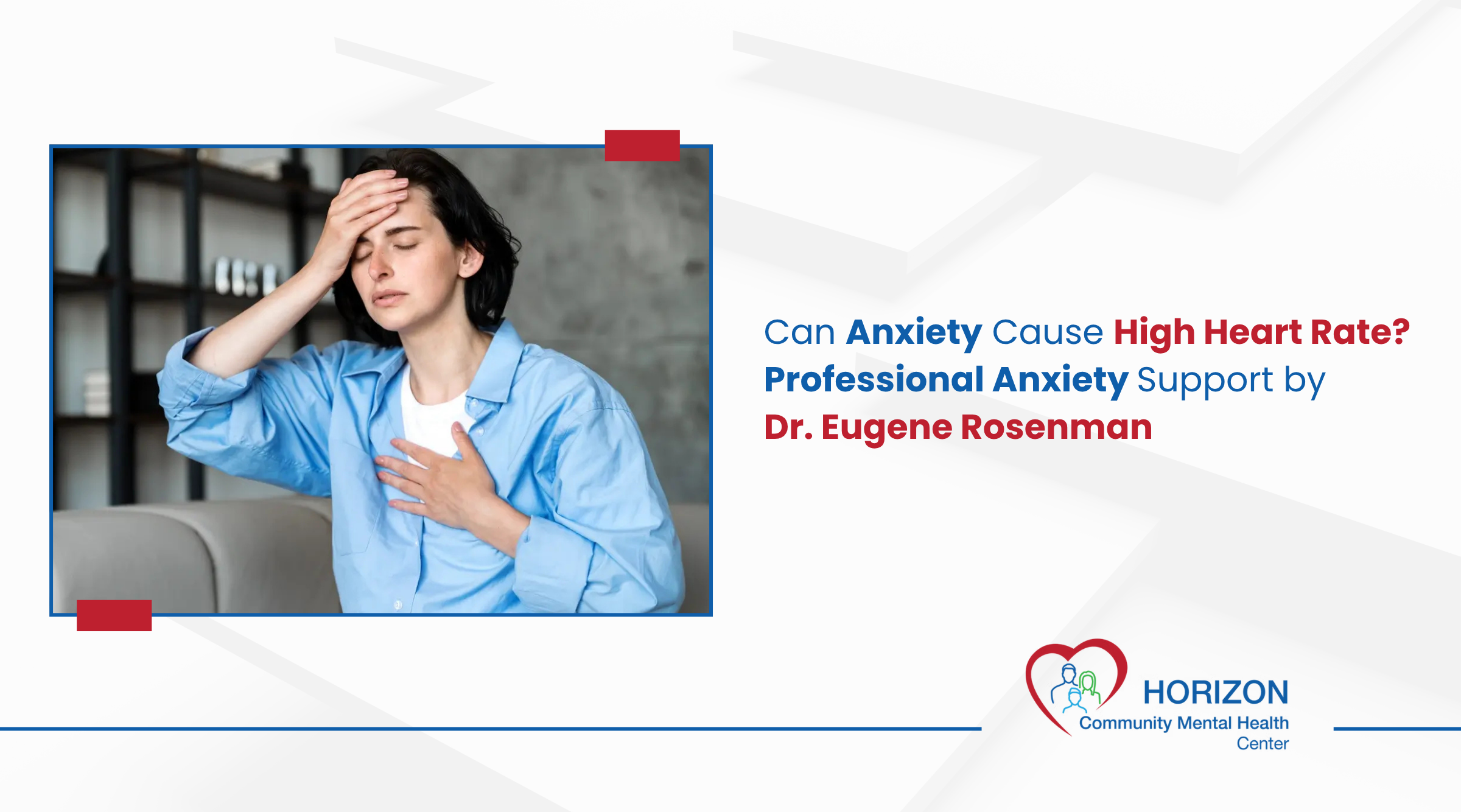
Anxiety means feeling very worried or scared. It can affect both your mind and your body. One common effect is a fast heart rate. Many people experience anxiety and heart palpitations during stressful moments.
At Horizon CMHC, we help people understand this connection. We help clients with emotional stress and physical symptoms, like a racing heart.
Can Anxiety Cause High Heart Rate?
Yes. Anxiety is part of our “fight or flight” system, which causes an increased heart rate. Your brain detects a danger and fires up this threat response.
During this response, you may notice:
- Faster heart rate
- Rapid breathing
- Muscle tension
- Release of stress hormones
These changes help in short-term situations, but frequent anxiety can make them happen repeatedly, even when you are safe.
Why Anxiety Raises Heart Rate
When anxiety starts, your body releases a chemical called adrenaline.
Adrenaline makes your body feel “ready for action.”
Frequent anxiety keeps your body in a stressed state. This can be linked to nervous emotion and long-term worry patterns.
Common reasons include:
- Overthinking and worry
- Panic attacks
- Stress from work or family
- Trauma or past experiences
- Health anxiety or fear of illness
At Horizon CMHC, we recognize that your symptoms are real, even with a healthy test result.
Physical Symptoms That Come with a High Heart Rate
Symptoms associated with anxiety and heart palpitations are as follows:
- Shortness of breath
- Dizziness or lightheadedness
- Chest tightness
- Sweating
- Shaking or trembling
- Feeling weak or tired
These symptoms can cause a person to suspect that something is happening. This can make a person feel even more afraid and cause the heart to beat even more rapidly.
This cycle occurs often in times of anxiety. Symptoms may get worse the more you pay attention to them.
Can You Have a Heart Attack in Your Sleep?
Heart attacks during sleep are rare but can occur. However, Anxiety-related nighttime increases of heart rate occur much more frequently and are usually not serious.
It is important for people who get a rapid heart rate when they wake up to seek medical or psychiatric evaluation despite the frequency of the occurrence, for proper reassurance and care.
When To Seek Help for Anxiety and Heart Symptoms
You should seek support if:
- Your heart rate stays fast often
- Anxiety affects your daily life
- You avoid activities because of fear
- You feel constant worry or panic
- You have trouble sleeping or relaxing
See a psychiatrist for anxiety. They can evaluate and treat conditions like persistent anxiety or unspecified anxiety disorder.
Professional Anxiety Support by Dr. Eugene Rosenman
At Horizon CMHC, we treat the whole person, not just symptoms. Our care is led by Dr. Eugene Rosenman, a board-certified psychiatrist with over 20 years of experience. We focus on simple, human and supportive care for long-term healing.
Medication Management for Anxiety Relief
Medication can sometimes help reduce symptoms like a high heart rate due to anxiety.
At Horizon CMHC, we provide careful medication management that includes:
- Detailed evaluation of symptoms
- Safe and monitored prescriptions
- Adjustments based on your progress
- Clear guidance in simple language
Our goal is to help reduce physical symptoms like a racing heart while improving emotional balance.
Individual Therapy for Calm and Control
Talking to a professional helps reduce anxiety and slows the heart rate.
At Horizon CMHC, our individual psychotherapy sessions focus on:
- Understanding your triggers
- Learning calming techniques
- Changing negative thought patterns
- Building emotional strength
Dr. Eugene Rosenman uses simple methods so you can apply them in daily life. Many clients begin to feel more control over their bodies and thoughts after consistent therapy.
Group Therapy for Shared Healing
Many people often experience anxiety and heart palpitations.
Dr. Rosenman’s group therapy sessions offer:
- A supportive environment
- Shared experiences from others
- Learning from different coping skills
- Emotional connection and understanding
Group support helps reduce fear and builds confidence in recovery.
Creative Therapies That Calm the Nervous System
At Horizon CMHC, Dr. Rosenman Eugene also uses creative and gentle therapies to help the body relax.
These include:
- Music therapy
- Art-based activities
- Relaxation exercises
- Guided calming practices
These therapies slow the heart rate and help people express their feelings.
Living With Less Fear and More Balance
Anxiety makes your heart rate feel out of control, but good care helps.
At Horizon CMHC, we help you:
- Understand your body’s reactions
- Reduce fear of physical symptoms
- Learn grounding techniques
- Build confidence in daily life
Small steps lead to real change and a calmer heart.
Why Choose Horizon CMHC For Anxiety Care
Choosing the right care matters. At Horizon CMHC, we provide:
- Experienced psychiatric leadership
- Personalized treatment plans
- Safe and respectful environment
- A combination of medical and creative therapies
- Focus on both emotional and physical symptoms
People are helped to feel safe, calm and strong again.
Final Message on Anxiety and High Heart Rate
Anxiety can make your heart beat fast. But you do not have to feel this way forever.
With the right help, your body can feel calm again. Your mind can also feel more relaxed and lighter.
At Horizon CMHC, we care about helping people feel better. We support you with kindness and understanding.
Our team, led by Dr. Eugene Rosenman, helps people who feel stressed or worried. We care for your mind and body.
Call us today to start feeling calm and strong again.
FAQs
How fast can anxiety attacks high heart rate?
It happens within seconds due to adrenaline.
Does anxiety make you feel weak?
Anxiety creates temporary feelings of weakness.
Can anxiety cause a heart attack?
Anxiety does not cause heart attacks, but it can mimic symptoms.
Can getting scared cause a heart attack?
A sudden scare can raise heart rate and blood pressure but it’s rarely dangerous.