When people think about mental health care, they often think about talking about feelings.
That is important.
Professional mental health care goes beyond healing feelings. It also helps train us for daily life.
Think about it. Getting up on time, managing a household budget, having a difficult conversation with a coworker and making decisions without second-guessing yourself.
These aren’t just personality traits you’re born with; they’re skills. And like any skill, they can be learned, practiced and strengthened.
At Horizon CMHC, we see this happen every day. People come in feeling sad or worried. They leave feeling better and they also leave doing better. They feel more in control of their lives.
So, can mental health care help you develop practical skills for everyday living?
The short answer is yes. Let’s find out how.
How Mental Health Care Helps You in Daily Life
Mental health issues can impact more than just your state of mind.
They can also affect how you think, make choices, communicate, plan and complete daily tasks.
When you feel very sad or have low energy, even simple tasks may feel hard.
You may struggle to:
- Take a shower or care for your personal hygiene
- Prepare a meal
- Clean your home
- Answer a phone call
- Go to work or school
- Meet with friends
- Keep up with appointments
When you feel very worried, making even small choices can feel stressful.
You may spend a long time thinking about:
- What should I eat?
- What should I wear?
- What should I say?
- What if I make the wrong choice?
- What will other people think?
Research continues to demonstrate the negative impact mental health issues can have on an individual’s functioning in activities of daily living, work and social activities. But the good news is that it’s also true the other way around. The better the mental health, the better the functioning in everyday life.
Mental health care can help you understand what is making these tasks difficult. It can help you learn healthy ways to cope with stress and handle daily challenges.
The skills you want to practice will depend on your goals and needs.
Core Practical Skills You Gain in Mental Health Care
Let’s look at some skills you can learn.
- Solving Problems and Making Choices
Life gives us problems every day.
Mental health care teaches you how to solve them step by step.
You learn to stop, think and pick the best choice. You do not have to feel stuck or scared.
Cognitive behavioral therapy (CBT) is one strategy that might enable people to identify problematic thought patterns and build more beneficial ways of responding to difficulties.
The goal is not to get every decision right.
The aim is to grow more comfortable thinking through challenges and taking action.
- Emotional Regulation
Have you ever gotten so mad that you yelled at someone? Or felt so sad that you could not talk?
Mental health care teaches actionable distress-tolerance techniques. You learn how to:
- Identify physical signs of stress before they escalate
- Stay in the moment with grounding techniques
- Don’t do things impulsively, but do things thoughtfully
Studies show that these techniques greatly increase the ability for emotion regulation and problem-solving.
People who use these techniques do not get as upset with family or friends. This approach makes home life happier and work life easier.
- Communication and Relationship Skills
Here’s something that surprises a lot of people: therapy is basically communication training.
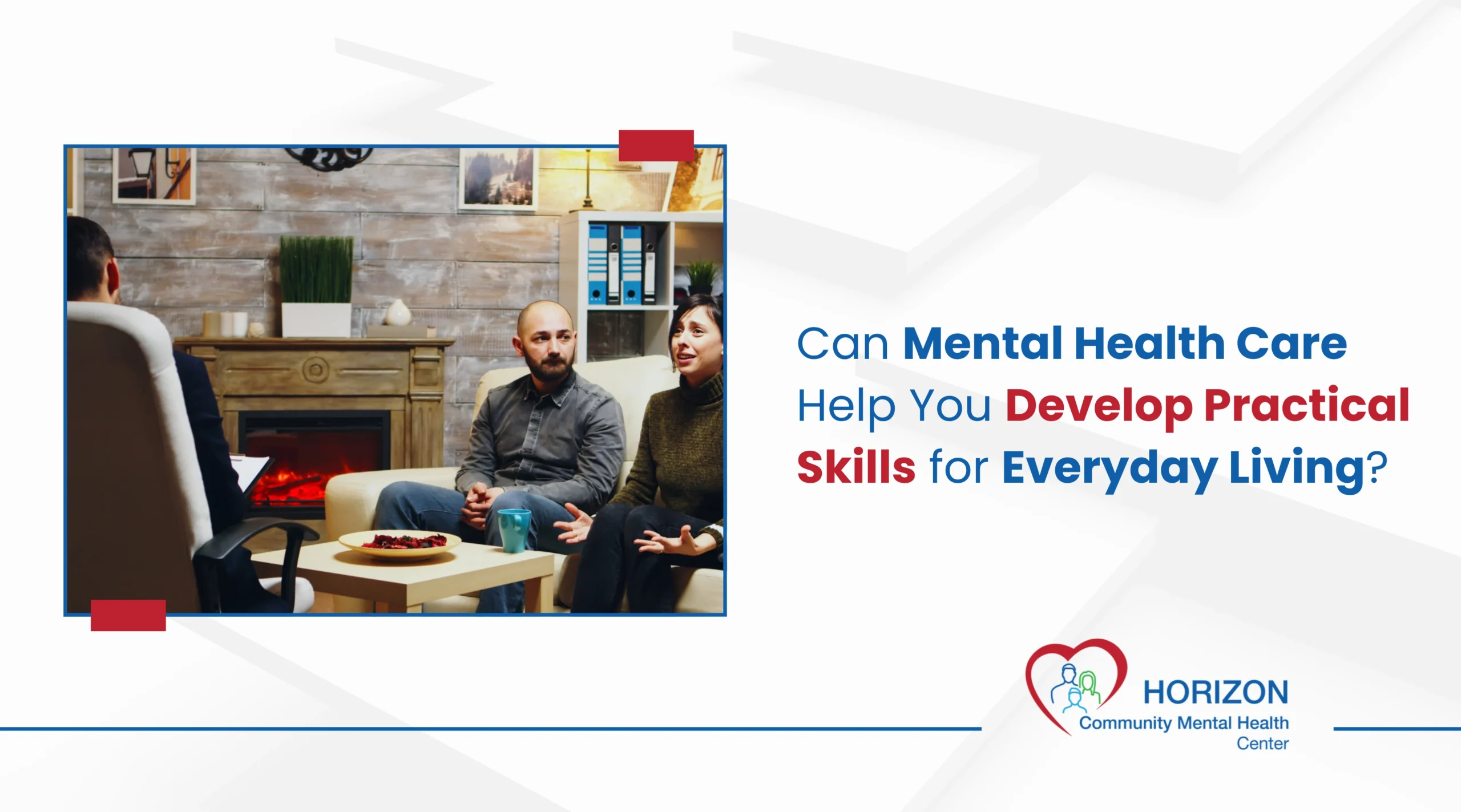
In individual therapy, you will learn how to speak your needs. You have the chance to practice listening and responding in group therapy. Both can help you develop skills that can enhance all relationships in your life.
Group therapy, in particular, has been shown to:
- Improve communication skills
- Reduce isolation
- Build confidence
You learn how to:
- Share your perspective
- Give and receive feedback
- Navigate disagreements
All of this happens in a safe, supportive environment.
- Managing Time and Staying Organized
Mental health issues can make it hard to plan and stay on track.
Therapy helps with that.
- You learn to break big jobs into small steps
- You learn to make a schedule
- You learn to finish what you start
- Self-Care and Health Management
This one might seem obvious, but it’s worth stating: mental health care teaches you how to take care of yourself.
That means:
- Taking a bath or shower every day
- Making healthy meals
- Taking your medicine on time
- Making a daily routine
These are not just small things. They help every part of your life.
Why This Matters So Much
Here’s the thing about practical skills: they create momentum.
When you learn one skill, it helps you learn others.
So, when:
- You manage your time better; you feel less stressed
- You talk better; your relationships get better
- You solve problems better; you try new things
Each skill builds on the last. It creates a good cycle that reinforces your mental health and your daily functioning.
At Horizon CMHC, we see this cycle happen all the time.
We offer individual therapy and group sessions, therapeutic games and activities; all of them help you build skills. We are here to help you feel better and live better.
Final Thoughts
If you have ever wondered if mental health care is worth it or if it can really help your daily life.
The answer is yes.
Skills learned in mental health care stay with you.
They become part of how you approach challenges, how you treat yourself and how you show up in the world.
And here’s the best part: you don’t have to figure it out alone.
Ready to build skills that last?
At Horizon CMHC, we want to help you do more than manage your feelings. We want to help you thrive in every part of your life.
Whether you want to:
- Talk better with others
- Cope with stress
- Feel more in control of your day
We are here for you.
Contact us today to set up a visit. You can start right now, exactly where you are.
Your journey to a better daily life starts with one small step. Let’s take it together.
FAQs
Can family members be involved in my mental health care?
Yes. Many programs offer family therapy and education. Your family can learn how to support you. They can also learn skills to help at home.
Can mental health care help me keep a job?
Yes. Many programs offer vocational support. They can help you with job skills, resume writing and interviewing. They can also help you keep a job once you have one.