Experiencing trauma can be one of the most difficult challenges a person faces. A scary or painful event can deeply affect a person’s mind and heart. Sometimes, those emotions cannot be put into words. You may feel trapped, overwhelmed, or confused, and finding the words to talk about what you’re going through can seem impossible. When words are not enough, other ways to heal are needed. This is where art therapy comes in to help people find peace and recovery.
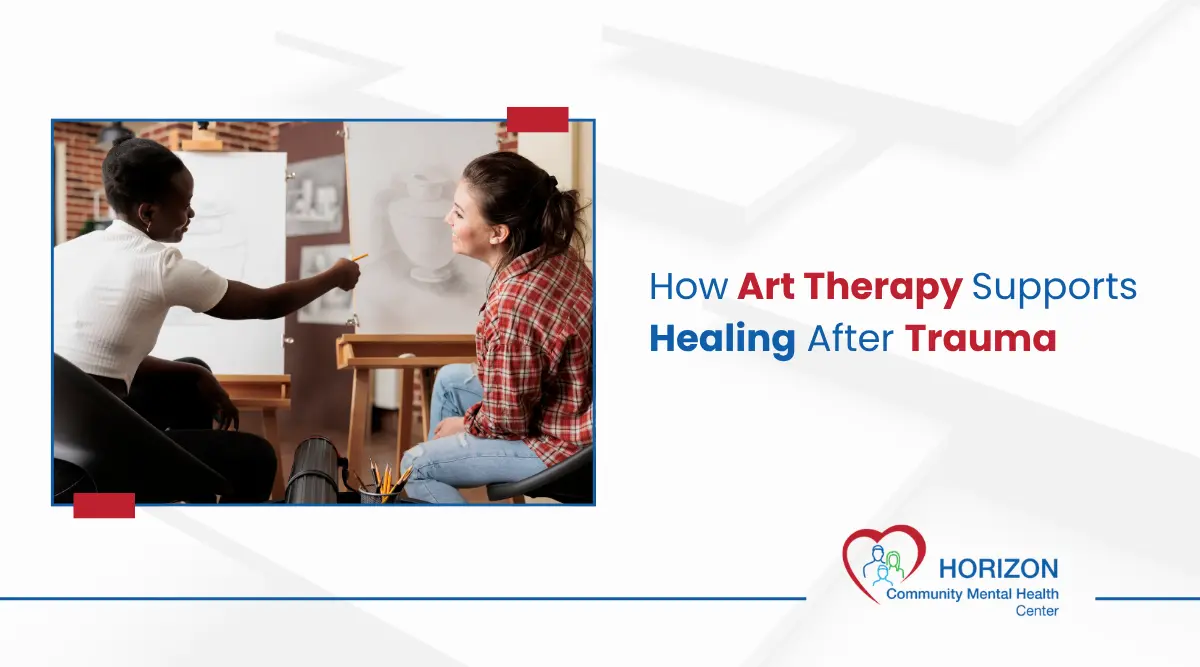
Art therapy is a healing therapy based on art. It doesn’t require you to be an artist. It doesn’t matter if you can’t draw or paint. Art therapy is not a pretty picture-making process. It is about communicating emotions that can’t be expressed through words but can be expressed through art.
Horizon CMHC’s art therapy program helps people heal from trauma. We offer a safe space to express tough feelings.
Let’s explore how art therapy supports healing after trauma.
Understanding Trauma and the Mind
To grasp how art therapy helps trauma recovery, it is important to understand how trauma impacts the brain.
When a person encounters fear, the brain activates survival mode. Its goal is to protect the individual from danger. During traumatic events, memories might not form normally. They often lack a clear beginning, middle and end.
Instead, trauma memories might be stored as:
- Images or flashbacks
- Physical sensations
- Strong emotions
- Sounds or feelings linked to the event
This makes discussing trauma feel so challenging. While traditional talk therapy can help, it relies on language.
When someone is overwhelmed by trauma, it affects the brain’s language center. That is why it is a challenge to find words. Memories live in another part of the brain, without words, only with images, sounds and feelings.
Art therapy connects with this part of the brain. It doesn’t require words. Instead, it encourages the use of images and colors. This is why art therapy can access areas that talk therapy often can’t.
How Art Therapy Supports Healing After Trauma
Art therapy supports healing in various ways. Here are key benefits:
- Art Therapy Gives You a Safe Way to Express Feelings
After trauma, you might have big feelings. You might feel
- Angry
- Sad
- Ashamed
These feelings can be hard to explain and some may fear judgment.
Art provides a safe outlet for these emotions. For instance, one might:
- Paint anger as a big red storm
- Draw sadness as a dark ocean
- Make a clay shape that shows fear
The art holds these feelings for you. You do not have to carry them alone.
The therapist helps you understand your art. But you are in charge. You decide what to make and how to make it. This is important because trauma takes away your control. Art therapy gives it back.
- Art Therapy Helps You Process Memories
Bad memories can get stuck in your head. They play over and over. This is painful.
Art therapy can help you change how you see these memories. You can
- Draw the memory
- Make a collage about it
- Make a series of pictures that tell the story
When you put a memory into art, you are changing your relationship with it. You are no longer just a victim of the memory. You are the creator. You decide how to show it. You can change the colors. You can add things or take things away. This helps you feel stronger.
With time, the memory hurts less and becomes a picture you can view without tears.
- Art Therapy Helps You Connect with Your Body
Trauma can make you feel disconnected. You might feel like you are outside your body. You might feel numb. You might not feel anything at all.
Making art is a physical activity.
- You hold the brush
- You press the clay
- You move your hand across the paper
This helps you connect with your body again. It helps you feel grounded. It helps you feel real.
The sensations of making art can be very soothing. The warmth of cool clay is soft to touch. The smell of paint. The sound of a marker on paper. These physical sensations can help to bring awareness back to the body softly or easily.
- Art Therapy Builds Self-Esteem
Trauma can make you feel bad about yourself. You might:
- Blame yourself for what happened
- Feel like you are broken
- Feel like you will never be okay again
Art therapy helps you see your strengths. When you create it, you realize that you are creative. You realize that you can do something to contribute. This makes you feel proud.
The therapist reviews your creations. They help you see the good in your art. Over time, you see the good in yourself.
- Art Therapy Gives You a New Way to Communicate
After trauma, you might feel alone. You may feel no one will understand. Art can convey a message without using words. You can share your art with someone you can trust. They can examine it and begin to comprehend. It helps make you feel less lonely.
In group art therapy, you share art with others who have been through similar things. You realize that you are not alone. You notice that others feel the same, too. This develops friendship and support.
- Art Therapy Helps You Imagine a New Future
Trauma can make the future feel scary or hopeless.
Art therapy helps people imagine a better future.
They can create:
- Pictures of their goals
- Collages of their dreams
- Artwork showing hope and happiness
This does not mean forgetting what happened.
It means understanding that trauma is only one part of life. There can still be healing, growth and joy.
Art Therapy for Different Types of Trauma
Art therapy can help with many different types of trauma. Here are some examples:
- Acute Trauma
This is a single event, like a car crash.
- Complex Trauma
Complex trauma involves repeated trauma, such as abuse.
- Developmental Trauma
This occurs during childhood.
- Intergenerational Trauma
This is trauma that is passed down through families.
Art therapy is flexible. It can be adapted to meet your specific needs.
Art therapy is suitable for all ages and all backgrounds. It is truly a universal tool for healing.
Horizon CMHC provides personalized art therapy for acute, complex and more trauma-related challenges.
Contact us for assistance and support on your journey to emotional well-being.
Long-Term Benefits of Art Therapy
The skills learned in art therapy can help people for many years.
People may learn how to:
- Express emotions
- Manage stress
- Handle difficult memories
- Feel calmer
- Build strength
Many people feel more:
- Hopeful
- Confident
- Strong
- Connected
Art therapy is about feeling better today. It helps people build skills for a healthier future.
Conclusion
Trauma changes you. But it does not have to define you. You can heal. You can grow. You can find joy again.
Art therapy is a beautiful way to support that healing. It gives you a voice when words fail. It helps you process your memories. It helps you regulate your emotions. It builds your self-esteem. It connects you with others. It is accessible to everyone.
Horizon CMHC offers art therapy and many other services. We provide a safe, welcoming space. Our team creates care plans that fit each person’s needs.
If you are struggling with trauma, reach out today. Start your journey toward healing. Art therapy can light the way.
FAQs
What materials do I need for art therapy?
You do not need to bring anything. The therapist will provide all the materials. You might use paper, paint, clay, markers, or collage materials. Everything is provided for you. You need to show up and be willing to try.
Is art therapy only for people with PTSD?
No, it is not. Art therapy can help anyone who is struggling. It can help with stress, anxiety, depression and grief. It can also help with personal growth. Even if you do not have a diagnosis, art therapy can still be beneficial.