It may be difficult to begin group therapy. You can be nervous, quiet, or not know what to say; that is quite natural.
The early stages focus on getting comfortable. It’s about learning the rules and feeling safe.
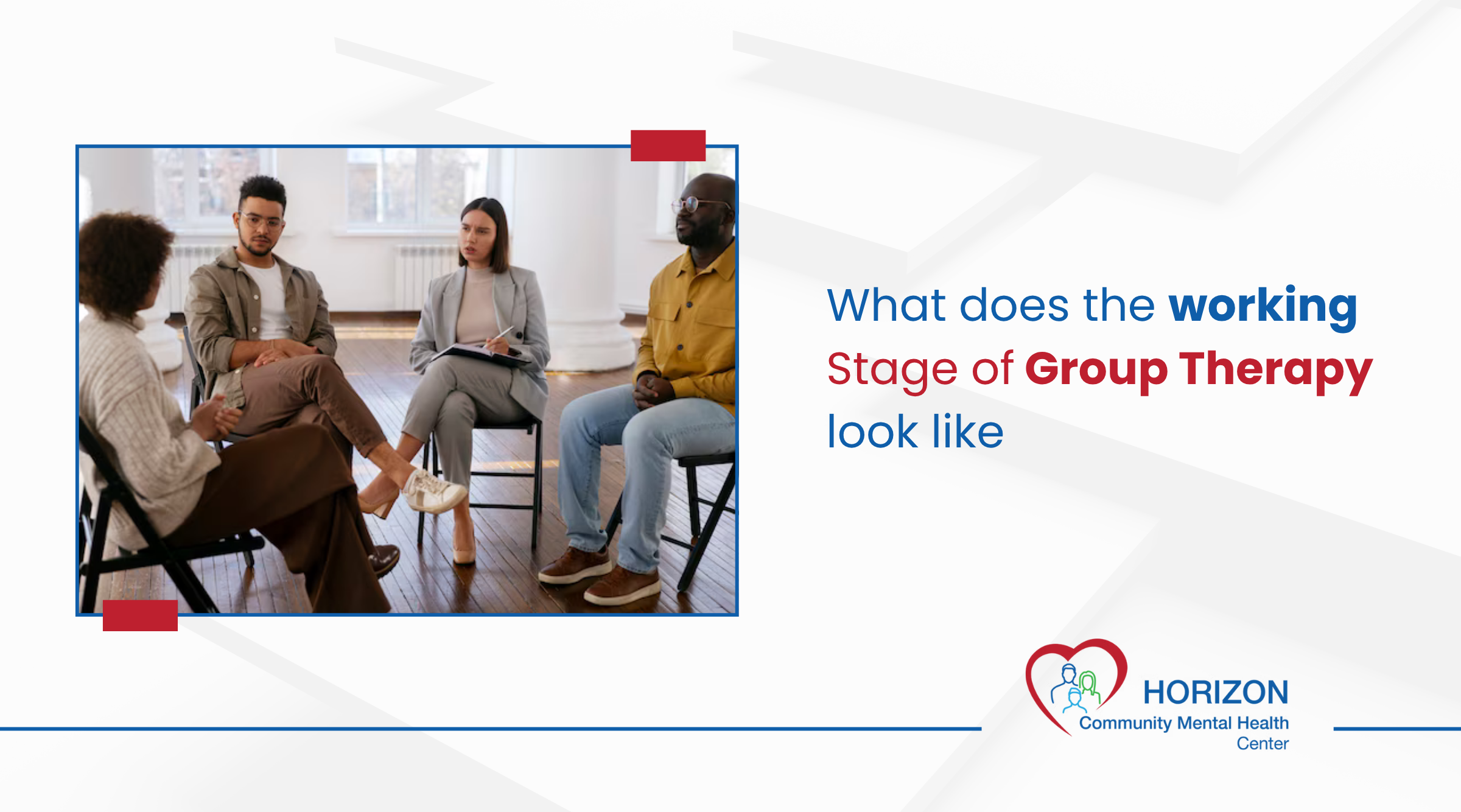
But the real progress happens in the working stage, the heart of therapy phases in group settings.
At Horizon Community Mental Health Center, group therapy provides a safe environment that helps people to be open, learn with one another and heal together.
Below, we will explore what the working stage of group therapy looks like, why it’s so important and how it fits within the phases of group therapy.
The Journey through Group Therapy
Several therapy phases normally follow the group stages in counseling:
- Initial Stage: Members: The members are reserved; they do a lot of listening and find out how the group operates.
- Transition Stage: Trust begins to develop and members can bring minor personal experience.
- Working Stage: This is the most fundamental stage in which actual therapeutic action occurs. Members feel secure, encouraged and willing to participate on an in-depth level.
- Termination Stage: Members are looking back and getting ready to end the group experience.
Understanding these therapy phases helps members recognize where they are in the journey and what to expect next.
What Does the Working Stage of Group Therapy Look Like?
The most important phase of group therapy is the working stage. This is when members feel secure enough to speak freely, open their hearts and begin making any real change.
In this stage:
- People feel more settled and comfortable in the group
- Trust among members grows
- Conversations become honest and reflective
Topics discussed often include:
- Anxiety
- Depression
- Stress
- Family challenges
- Life transitions
Sessions can be tough, but moments of hope and success matter just as much.
At Horizon Community Mental Health Center, group therapy offers insights, skill practice and confidence building. Participants learn from one another.
How the Working Stage Unfolds
During this stage, members move from listening to active participation. They:
- Share thoughts and feelings openly
- Experience challenging feelings, such as sadness, fear or frustration
- Ask questions about their experiences
- Practice new coping strategies
- Support and encourage each other
- Learn from shared experiences
Members feel seen, heard and understood in the group.
The Therapist’s Role
Therapists guide the group by:
- Maintaining a safe and respectful environment
- Encouraging balanced participation
- Asking supportive, thought-provoking questions
- Teaching practical coping skills
At Horizon Community Mental Health Center, our therapists use effective methods to support individuals. We assist group members when sharing feelings is difficult or emotions feel overwhelming. We adjust our approach to fit the specific needs of each type of group therapy.
Signs the Working Stage Has Begun
You may notice:
- Honest communication
- Active listening and empathy
- Members sharing both struggles and successes
- Collaborative problem-solving
- Use of coping skills outside of sessions
At this stage, members tend to become less concerned about evaluation and more self-assured in communicating.
Why This Stage Matters
The working stage is often the most impactful phase of therapy. It helps members:
- Change unhelpful thought patterns
- Build healthier emotional responses
- Develop stronger coping skills
- Realize they are not alone in their struggles
This stage fosters growth in small but meaningful ways: standing up, requesting assistance, establishing limits, or assisting others.
Common Emotions during the Working Stage
Members may experience a mix of:
- Courage
- Nervousness
- Sadness
- Relief
- Pride
- Hope
- Gratitude
Healing is not a straight path and that’s completely natural.
Group Therapy for Anxiety and Depression
Anxiety and depression can be particularly beneficial to people when using group therapy.
Group therapy for anxiety, it can:
- Reduce feelings of isolation
- Teach calming techniques
- Help manage racing thoughts
Group therapy for depression, it can:
- Encourage connection and support
- Reduce withdrawal and loneliness
- Restore a sense of belonging
Advantages of group therapy include building social support, learning from others’ experiences and feeling understood. It teaches that people are not alone and they have a reason to live.
Final Thoughts
The working stage of group therapy is when real healing happens. People learn from each other and try new skills. They also start to feel stronger and surer of themselves.
At Horizon Community Mental Health Center, group therapy is a safe place. People can talk, learn and grow together.
Ready to take the next step?
Reach out today to see how different types of group therapy can help. You can enhance your mood, discover support and gain practical skills for everyday situations.
FAQs
What techniques are used in group therapy?
Common group therapy techniques include CBT, role play, peer feedback and psychoeducational material.
How long does the working stage last?
It varies; however, this stage is typically the most prolonged as focused effort requires time.
What happens during the transition stage of group therapy?
Members begin to open up, and they might be nervous or uncertain. This phase develops a trusting relationship, shares skills, and equips the participants with the working stage.
No comment