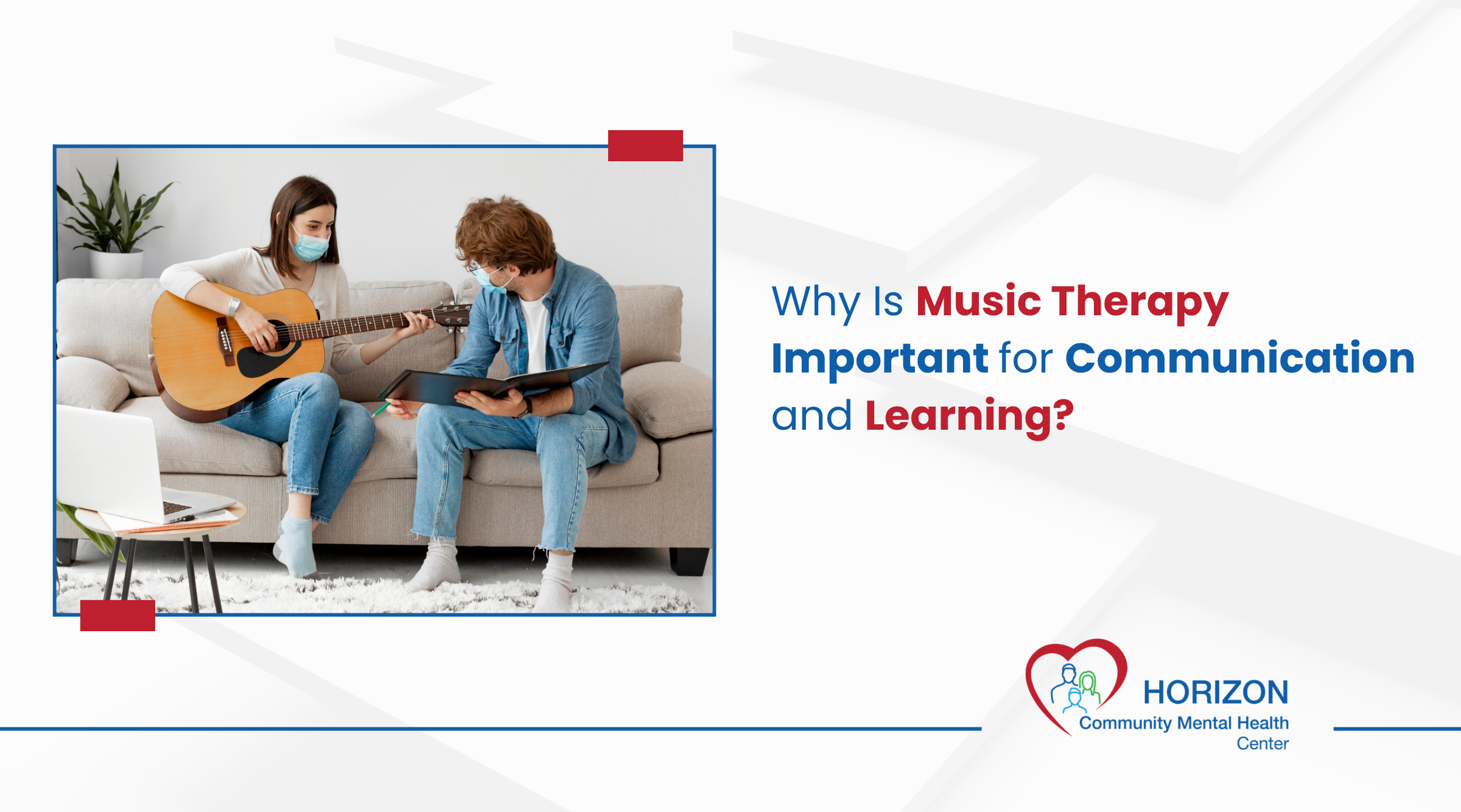
Music can do much more than just make people tap their feet. It helps people speak, listen, remember, and learn new skills. This is why music therapy is so effective for communication and learning. At HORIZON CMHC, we use music and educational therapy. These therapies help with emotional expression. They also improve communication and boost thinking skills. It happens in a safe and caring space.
This treatment helps older adults. They like simple help. It should be gentle. It is a good option when it comes to individuals who struggle to use words or those who desire to feel more confident in their daily lives.
Music Helps People Express Feelings
It’s hard to say how you feel. Depression, anxiety, loneliness, and feeling lost make it even harder. Where words are hard to find, music will assist.
A song allows people to express feelings in a safe way. A beat, melody, or even humming can communicate a lot. This helps individuals open up during therapy.
The music therapy can help individuals:
- Express emotions without fear.
- Feel calm and relax.
- Built trust with the therapist.
- Feel understood and heard
Communication becomes easy when a person feels safe.
Music Helps with Talking and Listening
Communication is not all about speaking. It also involves listening, waiting, and taking turns. All these skills can be supported by music therapy.
During a session, individuals may sing, clap, repeat words, or move to a rhythm. These small activities help the body and brain work together. They also improve focus and attention to sounds and voices.
Music can be used to aid communication because it can assist people:
- Practice speech in a fun way
- Follow directions
- Take turns in a group
- Learn to listen to sounds and words.
This is especially helpful for adults and older individuals who may need support with memory, focus, or speech.
Music Can Make Learning Easier
Learning isn’t just for children, adults and the elderly also continue to learn every day. They can acquire new coping mechanisms, new habits, or active and engaging ways.
Learning can be facilitated by music since it is easy to recall. Many people remember songs more easily than plain words. Rhythm helps the brain retain new information.
Music and educational therapy, could assist in learning by:
- Making lessons more fun
- Improving memory
- Breaking big ideas into small steps
- Keeping the mind active
When learning feels enjoyable, people are more motivated to continue.
Why Music Therapy Works So Well
Music engages many parts of the brain. It can influence mood, memory, attention, and movement, making it a powerful therapeutic tool.
A session may include:
- Singing a song
- Clapping to a beat
- Playing a simple instrument
- Listening to music and discussing it
- Learning new words or ideas through music
It is important to note that such steps are small, yet they can be significant. An individual can become more confident after taking only one session.
Benefits for Seniors and Adults
HORIZON CMHC supports adults and seniors. They help with daily living, mental health, and personal growth. Music therapy is appropriate as it is gentle, flexible, and encouraging.
The following are some of the key advantages:
- Better communication
- More self-expression
- Improved memory
- Stronger focus
- Less stress
- Improved mood
- More social connection
Older adults can listen to music. It can remind them of their past. Adults can use music to unwind, think, or bond with other people within the group. Music in both cases can be a gateway to healing.
Music Therapy Can Also Help in Groups
Group therapy can feel easier when music is part of the session. People may not always know what to say at first. Music helps break the ice.
In a group, music can help people:
- Feel less alone
- Share space with others
- Practice speaking in a safe setting
- Learn from each other
- Build friendships
This is important for people who may feel isolated or have trouble connecting with others. A song or rhythm can help everyone feel included.
A Safe and Caring Space Matters
Dr. E. Rosenman and the team at HORIZON CMHC believe that healing should happen in a warm and respectful place. That is important in music therapy too.
When the space feels safe, a person is more willing to try. They may speak more, listen more and learn more. A caring therapist can guide the session in a way that matches each person’s needs.
Music therapy works best when it is:
- Kind
- Patient
- Personal
- Supportive
- Easy to join
That kind of care helps people grow at their own pace.
Simple Ways Music Therapy Supports Growth
Music therapy is not about being a great singer. It is about using music to help the brain and heart.
It can help people:
- Say what they feel
- Learn new skills
- Remember important things
- Stay calm during hard days
- Connect with other people
These are essential life skills that promote independence and confidence.
Final Thoughts
The relevance of music therapy is in the fact that it enables individuals to communicate and learn meaningfully in a soft manner. It helps adults and seniors share feelings, build confidence, and stay mentally active. It is also able to make group sessions more comfortable and learning more fun.
HORIZON CMHC uses music therapy and educational therapy. This caring approach helps with emotional expression. It boosts communication and cognitive skills, providing a safe space to heal and grow through music.
Music is more than sound. It is a road to study, enjoy together, and feel good.
FAQs
Q. Can music therapy help with learning?
Yes. Music can help the brain remember things better and make learning feel fun and simple.
Q. How does music help with communication?
Music can help people listen, speak, and take turns. It can also make it easier to share feelings.
No comment