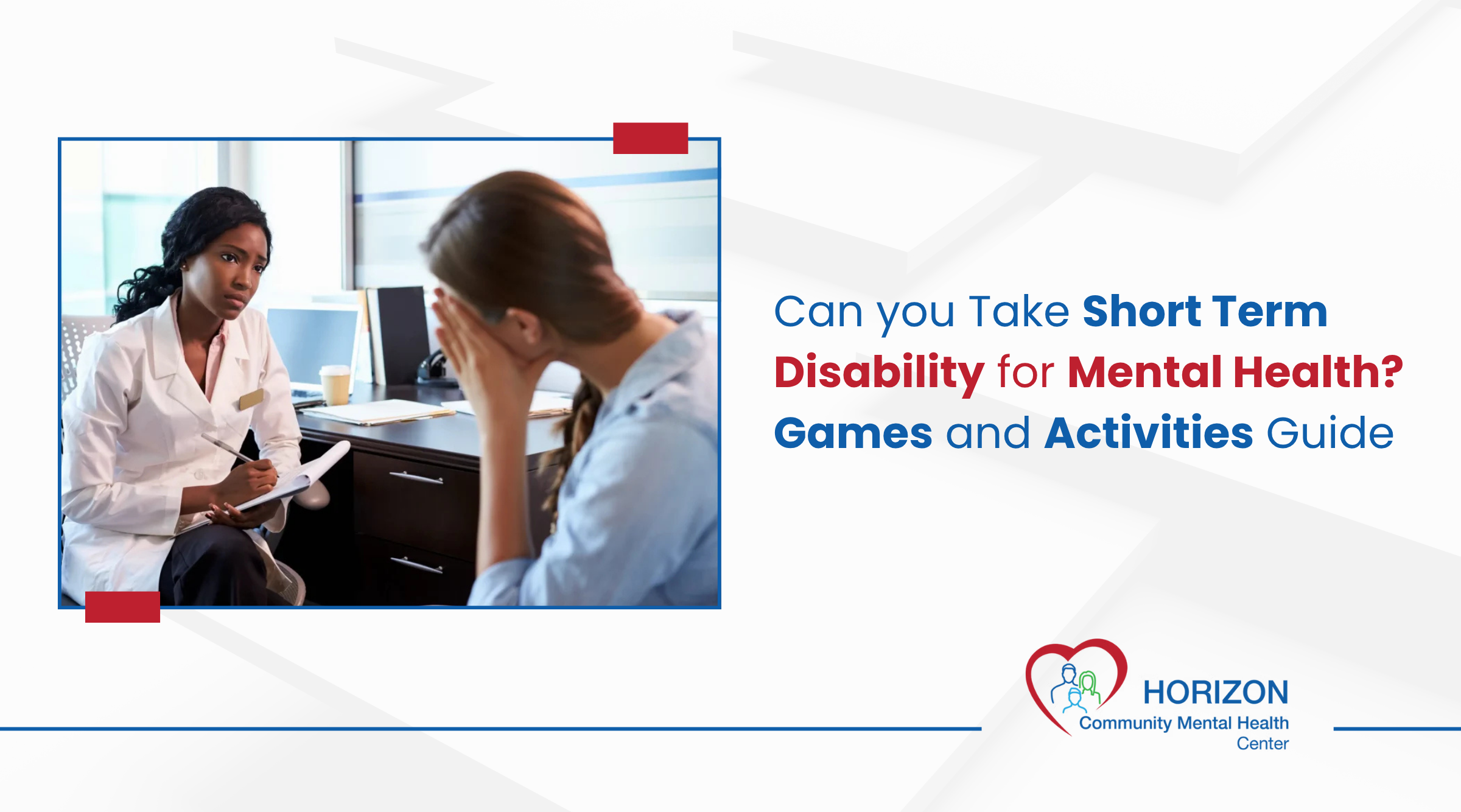
Mental health is equally vital as physical health. There are heavy days. Overwhelmed by stress, sadness, or fear, take a work break to rest and recover. When exploring the intersection of disabilities and mental health, short-term disability can be utilized for mental health concerns. This includes depression, anxiety, and burnout. If these problems make it hard to work, you can qualify.
We treat seniors and adults with respect at Horizon CMHC. We are aware that healing is time-consuming. It is also known that basic games and activities may assist the mind in getting relaxed once again.
What Short-Term Disability Means
Short-term disability is a type of time off from work. These mental health disability benefits may give a person part of their pay while they heal. Some plans cover physical health problems. Some also cover mental illness disability needs.
A doctor or mental health provider may need to say that time off is needed. The rules can be different for each job or plan.
Short-term disability may help when:
- A person feels too upset to work
- Sleep problems are making life hard
- Panic or fear gets in the way of daily tasks
- Depression makes daily life challenging
- Stress feels too strong to manage alone
Can Mental Health Qualify?
Yes, mental health can sometimes qualify for short-term disability. Many people ask, is depression a disability? The key is how much the condition affects daily life and work.
A person may need help if they:
- Cannot focus well
- Feel tired all the time
- Cry often or feel hopeless
- Have trouble being around people
- Feel too anxious to leave home
- Struggle to make simple choices
A mental health condition is real. It is not weakness. It is not laziness. Whether someone is facing a common struggle or what some might consider the most dangerous mental illness, it is a health need that deserves care.
Signs You May Need Time Off
Sometimes, a person pushes on, even when feeling pain inside. This can make things more complicated.
You might have to request assistance when you observe:
- You hate working on a daily basis
- You are angry or sad most of the times
- You quit liking things that you liked before
- You are forgetful of simple things
- You are nervous, anxious, or jittery
- You desire to sleep all day
- You are feeling stuck and unable to reset
If these signs are good, talk to a doctor. A therapist is also a good choice.
Games And Activities That Can Help
Rest is important, but healing does not always mean doing nothing. Small, simple activities can help the brain feel calmer. They can also give the day a gentle rhythm.
At Horizon CMHC, we use games and activities as part of care for seniors and adults. These can be a helpful part of a recovery plan.
1. Card Games
Easy card games can keep the brain active without too much stress. They can also bring comfort and routine.
Good choices include:
- Matching games
- Go Fish
- Simple number games
- Memory card games
These games can help a person focus on the present moment.
2. Puzzles
Puzzles are calm and steady. They help the mind work in a peaceful way.
Try:
- Word searches
- Jigsaw puzzles
- Simple crossword puzzles
- Picture matching games
Puzzles can be done alone or with a group.
3. Coloring And Art
Art gives feelings a safe place to go. A person does not need to be an artist to enjoy it.
Helpful activities include:
- Coloring pages
- Drawing shapes
- Painting with soft colors
- Making crafts with paper and glue
Art can help lower stress and build calm.
4. Music Time
Music can lift the spirit. It can also help people relax and remember good feelings.
Music activities may include:
- Listening to soft songs
- Singing with others
- Talking about favorite music
- Using rhythm tools like a drum or shaker
At Horizon CMHC, music and educational therapy can help support healing in a warm and gentle way.
5. Light Group Games
Being with other people can help a person feel less alone. Small group games can bring smiles and laughter.
Examples:
- Bingo
- Trivia with simple questions
- Name games
- Story sharing games
Group time can help build trust and connection.
Simple Daily Activities That Support Healing
Some days call for quiet. Some days call for light movement. A mix of both can help.
Try these gentle activities:
- Take a short walk
- Sit in fresh air
- Drink water slowly
- Stretch your arms and legs
- Listen to calm music
- Write one kind thought in a notebook
- Call a trusted friend or family member
These small steps may not fix everything, but they can help a person feel a little better each day.
How Horizon CMHC Can Help
Horizon CMHC offers care that feels warm, safe and human. Dr. E. Rosenman, our Medical Director Psychiatrist, leads with compassion and strong clinical care. His goal is to create a center that feels like home.
We serve seniors and adults with services that support healing and daily strength.
Our services include:
- Individual Therapy
- Group Therapy
- Music and Educational Therapy
- Arts and Crafts
- Games
Each service can support mental wellness in a different way. Some people need quiet one-on-one support. Others feel better in a group. Some heal best through creative activities. Many people benefit from a mix of care.
When To Reach Out
You can get in touch with me when:
- Most days, you feel overwhelmed.
- Your sleep is bad
- You feel stuck or numb
- You are not able to handle work in the same way
- You need help to make it through the week.
Seeking assistance demonstrates that you value yourself.
Final Thought
Yes, you may be able to take short-term disability for mental health, depending on your plan and your doctor’s guidance. Mental health matters. Time off can give a person space to rest, heal and rebuild strength.
Games and activities can also help during this time. Simple things like cards, puzzles, art, music and group play can bring comfort and joy.
FAQs
Q. Can games and activities help during recovery?
Yes. Simple games, art, music and puzzles can help the mind feel calmer.
Q. Who can get help from Horizon CMHC?
We help seniors and adults who need mental health support.
No comment