
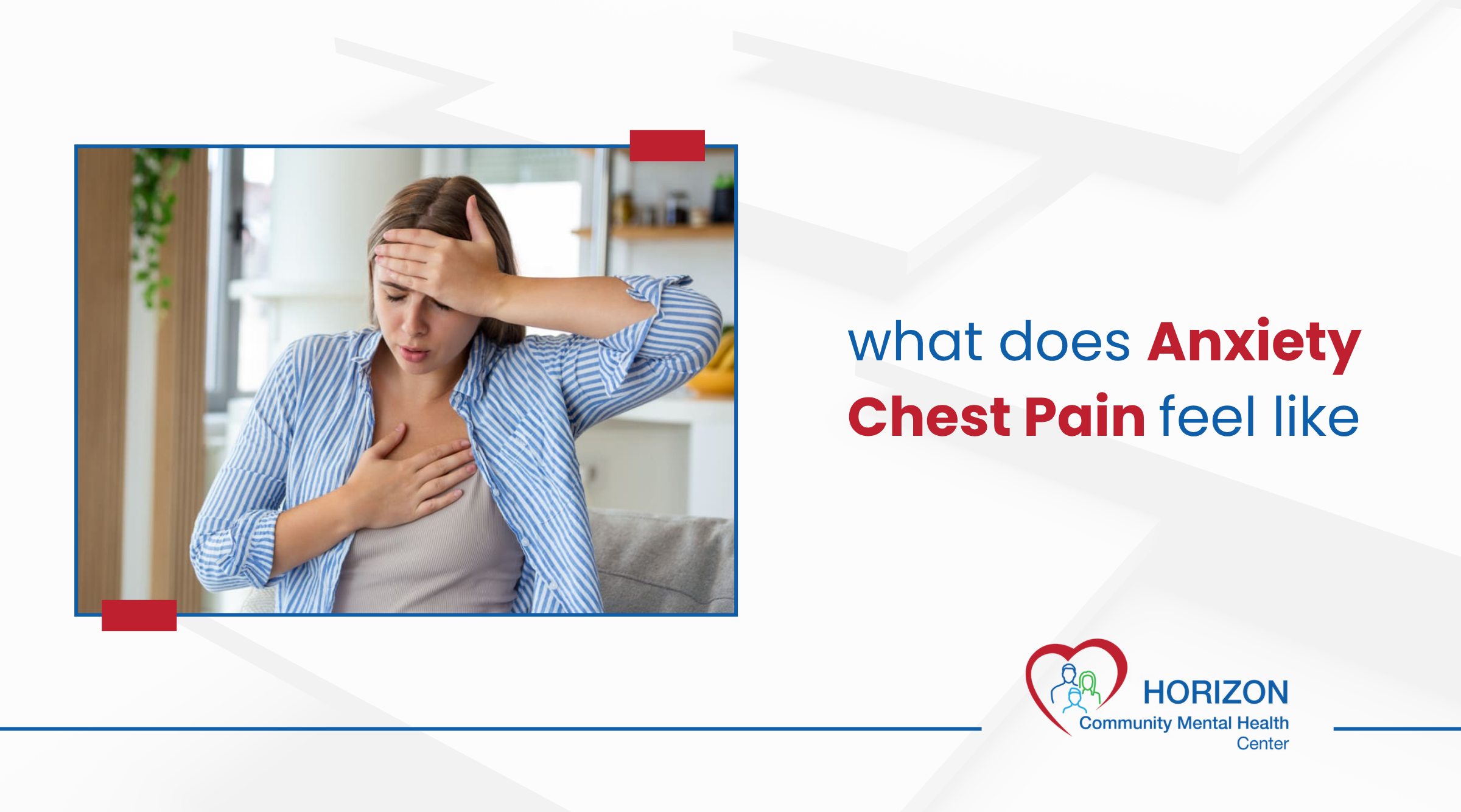
Chest pain is one of the most frightening anxiety symptoms. It can happen as a result of stress, panic, or concern and it’s frequently taken as a heart complaint.
Chest pain from anxiety is very genuine and feels just like real pain. However, it usually comes from the body’s stress response, not heart damage. Recognizing this relationship can help keep fear at bay and help control emotions.
We teach about these symptoms and how to pay attention to them in a caring, supportive manner at Horizon CMHC.
Let’s learn about the feelings of anxiety chest pain.
Can Anxiety Really Cause Chest Pain?
Yes. Chest pain may result from anxiety. This pain is a response to the ‘fight or flight’ mechanism, which occurs when your body feels distressed.
When this happens:
- Your heart rate could increase
- Your muscles can become tight
- You might have a higher breathing rate
These changes may cause your chest to be painful or uncomfortable.
What Does Anxiety Chest Pain Feel Like?
Anxiety chest pain feels different for each person. Common feelings include
- A tight or heavy pressure in the chest
- A sharp or stabbing pain that comes and goes
- A burning feeling in the chest area
- A squeezing sensation like something is pressing the chest
- A dull ache that stays for a while
Some individuals may also feel pain in other areas, such as:
- The neck
- The shoulders
- The arms
Other Symptoms That May Appear with Anxiety Chest Pain
Chest pain may happen with other anxiety symptoms, such as:
- Fast heartbeat
- Trouble breathing
- Feeling dizzy
- Sweating
- Shaking
- Feeling scared or panicked
These happen when you are very worried or scared.
Why Anxiety Triggers Chest Pain
Anxiety is a mental and physical condition. When stress occurs, the body reacts to protect itself.
This answer gives us the following results:
- Muscle tightening in the chest wall
- Over breathing, which reduces carbon dioxide levels
- Increased heart activity
- Heightened sensitivity to body sensations
These factors can cause alarming chest pain, but it is usually not dangerous.
Common Triggers of Anxiety Chest Pain
Many things can trigger anxiety chest pain, including:
- Work stress or pressure
- Family worries or conflicts
- Financial problems
- Fear of health issues
- Sudden panic or overthinking
- Lack of sleep or rest
- Crowded places
In some cases, focusing on chest sensations can make anxiety worse.
How Anxiety Chest Pain Differs from Heart Pain
Anxiety chest pain and heart pain feel similar but have key differences.
Anxiety-related chest pain often:
- Happens during stress or worry
- Feels sharp, shifting or inconsistent
- Improves with relaxation or calming techniques
- Changes with breathing or body position
Heart-related chest pain may:
- Appear during physical activity or exertion
- Feel like strong, steady pressure
- Spread to the jaw, left arm or back
- Not improve quickly with rest
If unsure, talk to a doctor right away.
Emotional Impact of Anxiety Chest Pain
Anxiety chest pain isn’t physical alone. It will frequently cause emotional upset, such as:
- Fear of dying or something bad happening
- Feeling out of control
- Panic or sudden worry
- Confusion or trouble thinking clearly
- A strong need to escape the situation
These emotions make physical sensations worse.
How We Support Anxiety at Horizon CMHC
At Horizon CMHC, we help people learn how to manage anxiety.
Individual Therapy
We help clients:
- Identify anxiety triggers
- Understand physical symptoms
- Challenge fearful thinking patterns
- Build long-term coping strategies
Group Therapy
Group sessions offer:
- Shared experiences and support
- Reduced feelings of isolation
- Learning from others facing similar challenges
- Improved emotional confidence
Creative and Relaxation Therapies
We also use:
- Art therapy for emotional expression
- Music therapy for relaxation
- Guided calming techniques for stress relief
These can help people feel calmer.
Long-Term Skill Building
We focus on symptom relief and lasting emotional resilience, including:
- Stress management techniques
- Emotional regulation skills
- Panic response control
- Healthy thinking patterns
How to Calm Anxiety Chest Pain
If anxiety causes chest pain, try:
- Practice slow, deep breathing
- Sit in a quiet and safe place
- Relax shoulder and chest muscles
- Drink water slowly
- Focus on calm thoughts or soft sounds
These steps are not a replacement for medical care but may help you feel better.
When Should You Get Help?
Get medical help if:
- Chest pain is new or very strong
- Pain does not go away
- Pain comes with severe shortness of breath
- There is pain in the arm, jaw, or back
- You feel unsure about the cause
It is always better to rule out medical conditions for safety.
Conclusion
Anxiety chest pain can be intense. However, it often comes from stress, not heart damage. It can be managed with the proper knowledge and assistance.
At Horizon CMHC, we are dedicated to supporting people who struggle with anxiety with loving care, healing through creativity and emotional support. We spend time with each person, working step by step.
Experiencing chest pain from anxiety, contact us for support.
FAQs
How long does anxiety chest pain last?
It may last a few minutes or longer. It often gets better when you relax.
Should I go to the hospital for anxiety chest pain?
If you are not sure what is causing the pain, it is safest to get medical help.
Can anxiety chest pain happen every day?
Yes. It can happen often when someone feels stressed or worried. Therapy can help.